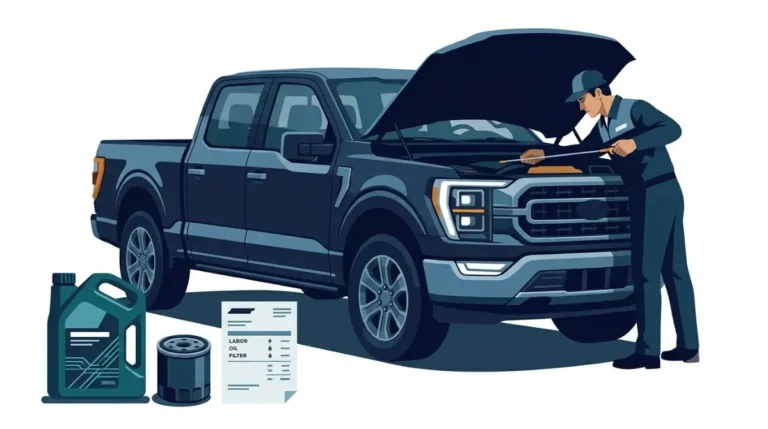
Oil pressure light after an oil change? Stop, then find the cause

Low oil pressure after an oil change can start at the filter. GM’s 18-NA-033 lists eight models; Audi’s 2013 3.0 FSI bulletin wants a 155 (±1) mm filter.
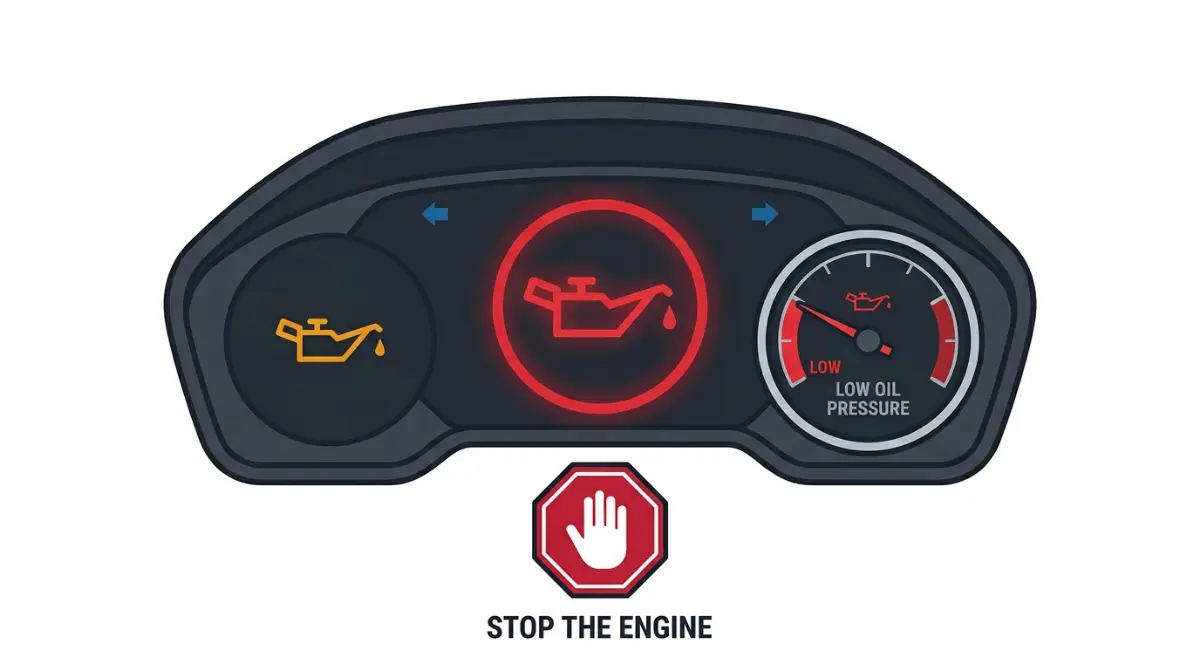
Table of Contents
Recall and bulletin status checked on November 3, 2026.
Stop the engine, then check what the shop changed
Treat a red oil-pressure light that comes on after a fresh oil change as genuinely low pressure until a gauge shows otherwise. Shut the engine off, check the dipstick, and start with what the service touched: the oil level, the filter and the drain plug.
That order comes straight from the manufacturers. GM and Audi have both issued technician bulletins that trace a low-pressure warning to a filter problem created during service, and both begin the diagnosis with a pressure reading. A failed sensor is possible, but it’s the wrong thing to blame first on a car that ran fine before the oil change.
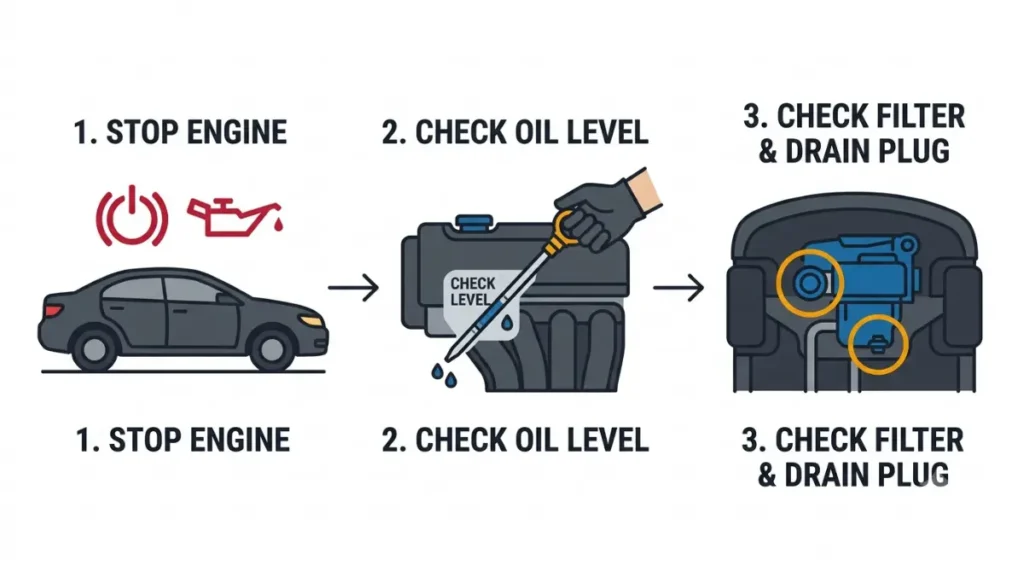
Safety note: Engine lubrication. Low oil pressure “can cause serious mechanical damage almost immediately” (Honda owner’s manual). If the light stays on, have a qualified technician inspect the vehicle before it’s driven again, and don’t crawl underneath to hunt for a leak.
Brief flicker on first start, or a light that stays on?
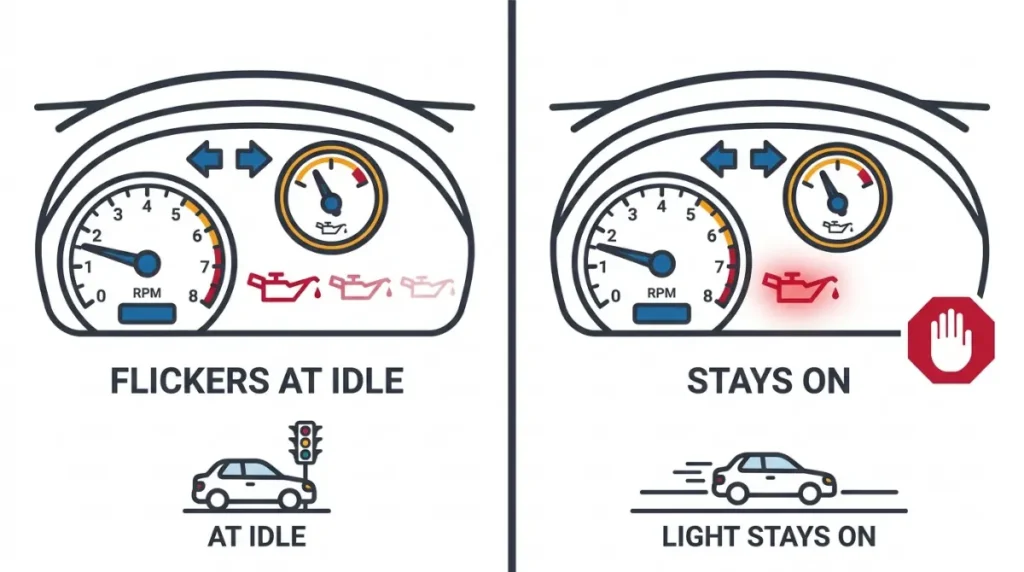
A red light that flickers at idle and goes out once you pull away is the exact complaint in GM bulletin 18-NA-033. The bulletin describes the low oil pressure light coming on, or flashing on and off, at idle, and ties it to oil draining back past the filter.
Owners often describe a one- or two-second delay at the first start after a filter change. None of the manufacturer documents linked here calls that delay normal, so judge it by what happens next: the light should go out and stay out, both at a stop and on the road. If it returns at a stoplight or never goes out, park it.
Check that it’s the warning and not the reminder. Chevrolet’s oil page treats “Change Engine Oil Soon” as a service reminder and “Oil Pressure Low/Stop Engine” as a stop-now warning. Its technicians reset the oil life monitor after the change, so a reminder still showing points to a missed reset, and what the oil life percentage counts explains that reading.
Four service mistakes that bleed off oil pressure
Bulletin 18-NA-033 walks GM technicians through the first one. During the service, tabs on the oil filter can break off and drop into the filter housing. A piece lodged under the housing’s drain check valve keeps that valve open after the new filter goes in, so oil drains back to the pan and pressure to the engine falls.
The second is a filter installed wrong. GM’s illustrations show one crushed during installation, too damaged to let the check valve close, with the same drop in pressure.
The third is a filter that’s the wrong size. Audi’s bulletin for its 2013 3.0 FSI models comes down to filter length, and the figures are in the next section.
The fourth is a low oil level because oil is getting out. A drain plug or filter seal that leaks after a change lowers the level, and a leak at the plug or filter after an oil change covers how that one shows up.
All four sit under the car or inside the housing. GM prints a warning on its bulletins that they’re written for professional technicians, not do-it-yourselfers, and that’s the right place for this diagnosis.
2008–2018 GM and 2013 Audi bulletins that name the filter
From the 2008 Saturn Astra to the 2018 Cruze, Sonic, Trax and Encore, GM’s bulletin covers eight models built on six engine codes. Audi’s covers seven 2013 models with the 3.0 FSI engine.
| Bulletin | Vehicles | Engines | Service mistake named | First check |
|---|---|---|---|---|
| GM 18-NA-033 | 2013–2018 Buick Encore; 2009–2011 Chevrolet Aveo; 2011–2018 Cruze; 2012–2018 Sonic; 2013–2018 Trax; 2009–2010 Pontiac G3 and Wave; 2008–2009 Saturn Astra | LUJ, LUV, LUW, LWE, LXV, 2HO | Filter tabs broken into the housing; filter crushed on install | Oil pressure on a manual gauge |
| Audi 2033379/2 | 2013 A6, A7, S4, S5, S5 Cabriolet, Q5, Q7 | 3.0 FSI | Oil filter too short | Filter length |
Sources: GM 18-NA-033 and Audi TSB 2033379/2, both on NHTSA’s site.
Audi’s fix starts with a length check. The filter must be 155 (±1) mm long. A shorter one leaves the drain flap in the filter housing partly open, oil pressure is lost, and the engine computer stores fault code P164D00, sometimes with the red warning lit. The listed replacement filter is part 06E115562A.
Neither document is a recall. Both are service bulletins, which tell a technician how to diagnose a condition, and Audi’s is informational only outside any warranty, so a listed vehicle doesn’t get a free repair from it. How a bulletin differs from a recall sorts out who pays when one applies.
What a shop should measure before blaming the sensor
Replace the oil pressure sensor without a pressure reading and you can pay for a part that was never the fault. GM’s correction starts with a manual gauge, moves to the filter’s condition, and only then to the check valve. Audi’s starts with the filter’s length and goes to its guided test plan only if the filter measures right.
Put these to the shop that did the oil change before you approve any repair:
- What did a mechanical gauge read at hot idle, and what’s the spec for my engine?
- Which filter part number went on, and does it match the one listed for my engine?
- Was the old filter seal confirmed off and the new filter checked for damage?
- Did anyone inspect the housing’s check valve for debris?
- What oil grade went in, and how many quarts?
Before you approve a repair: Get the gauge reading in writing. A new sensor on an engine with low pressure leaves the light’s cause untouched and the engine still short of oil.
On a 2013 Audi from that list, the second question settles a lot, since the bulletin’s first step is measuring the filter.
Sensor, filter or engine damage: cost and who pays
About $55 in parts and $328 to $482 in labor is how RepairPal’s Chrysler Town & Country estimate breaks down an oil pressure sensor replacement.
| Line | Chrysler Town & Country sensor replacement |
|---|---|
| Parts | About $55 |
| Labor | $328–$482 |
| Total | $384–$537 |
Source: RepairPal.
That’s one minivan’s typical range. Labor rates move with your region and with the shop, and the written quote for your own vehicle is the figure to plan on. Labor makes up roughly 85% to 90% of that bill, so the labor hours on a quote matter far more than the price of the part.
If the gauge points to the filter instead, the repair is the correct filter and fresh oil. Who pays for that, and for any engine damage, comes down to the shop’s work, which who pays when an oil change damages an engine works through.
Factory coverage is written for factory defects. On 2026-model Ford cars and light trucks (F-600 and heavier, and electric vehicles, excluded), Powertrain Coverage runs 5 years or 60,000 miles, whichever comes first. It pays when an internal lubricated part or the oil pump fails from a defect in factory materials or workmanship. Federal rules let a carmaker refuse an engine claim when it can show the service caused the damage, and what a carmaker must show to deny an engine claim lays out that test.
Tow it in or drive it after a top-off
Your owner’s manual decides whether you get one restart, and the makers don’t agree. Chevrolet says to stop safely, not restart the engine, check the oil level and contact a dealer.
One restart is allowed in Honda’s manual: shut the engine off, wait about 3 minutes, check the level and add oil, then start it again. If the warning doesn’t go out within 10 seconds, Honda’s instruction is to stop the engine and contact a dealer.
If your manual reads like Chevrolet’s, or the dipstick was already full, have the car towed. Drive it only if your manual allows a restart and the warning clears inside that limit after a top-off, then take it straight back for a gauge reading. When you call the shop that did the work, book the pressure test and have it keep the old filter.
Found this helpful? See more of our guides on Google.
Want to see our guides first on Google?