Oil Leak After Oil Change? Find the Likely Cause Before You Call
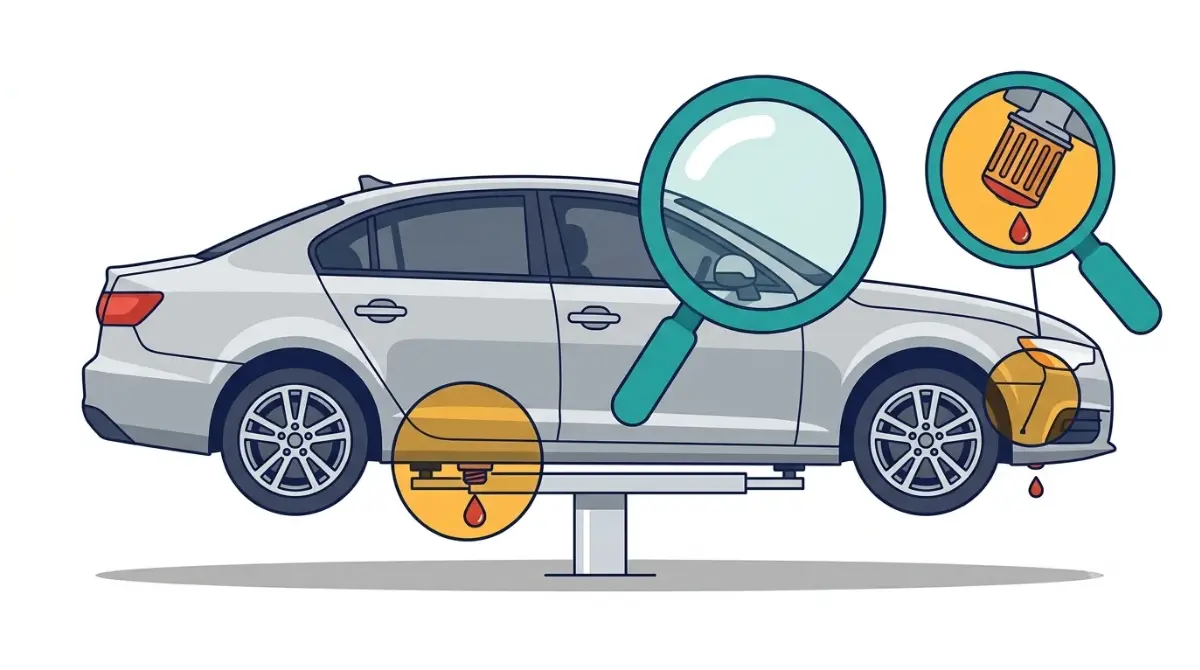
Table of Contents
Oil leaking after an oil change? Start here
An oil leak after oil change service usually traces to a short list of causes: the drain plug and its washer, the oil filter and its seal, or, less often, a defective part. Your owner’s manual and the shop or dealer that did the work are your first calls. This article helps you ask them better questions.
Dripping, smoking or just a spot?
A few drops on the driveway are not the same as a steady drip, smoke from under the hood, or a burning smell. The second group needs attention today.
Who did the oil change?
A shop, a dealer or you. That decides who to call first, and the steps below cover each case.
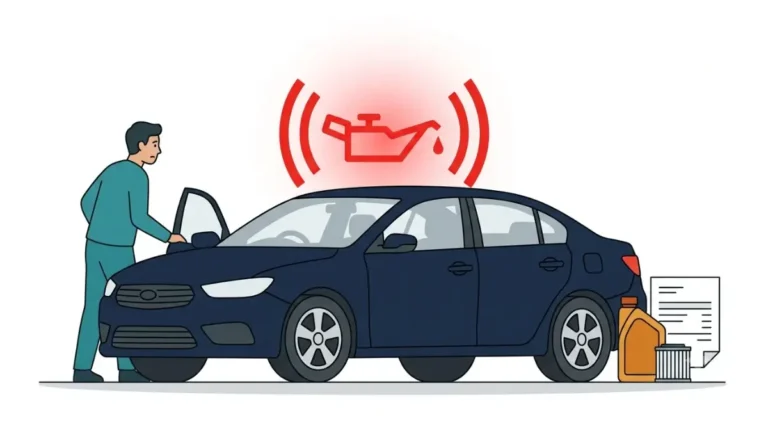
ℹ️ Safety Note: Oil that reaches hot exhaust parts can ignite. If you see smoke, smell burning oil, or the oil warning light comes on, stop driving and have the vehicle inspected. Do not jack the vehicle or work underneath it to look for the source.
Where the oil is coming from
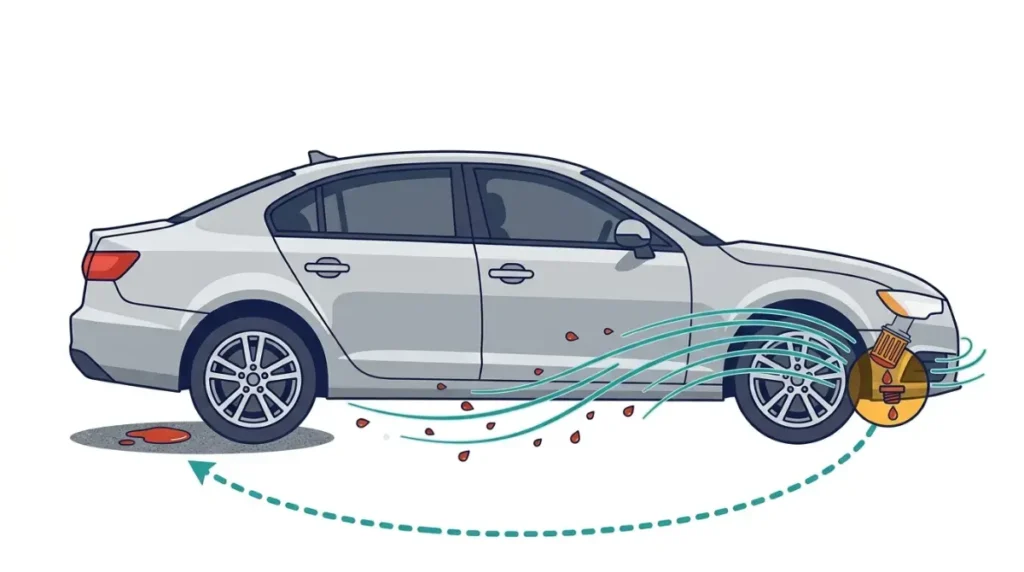
Oil moves. Airflow and gravity can carry it away from the real source, so where a spot lands does not prove where the leak starts. A technician’s first two checks are the drain plug area and the filter area, because both were handled during the service.
Plug area or filter area?
Only an inspection can tell which one is wet. A driveway spot cannot.
Fresh oil or spill residue?
Oil spilled during the service can leave residue that smokes or drips briefly. A spot that keeps growing is a real leak.
Is the oil level too high?
Read the dipstick or oil display the way your owner’s manual describes. No document we retrieved shows that overfilling alone causes a leak, but report a reading above the maximum mark to the shop.
Drain plug and washer leaks after an oil change
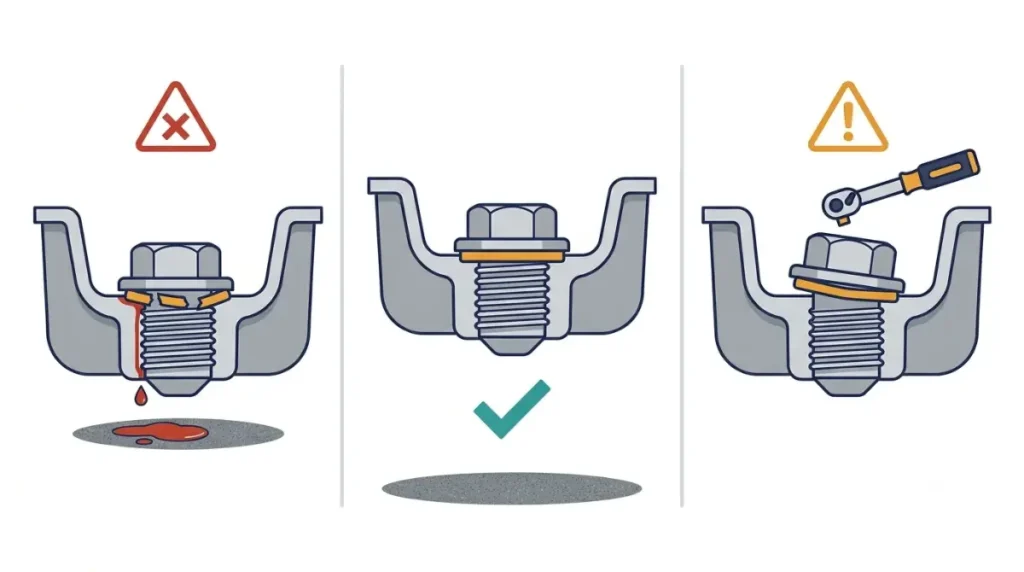
The drain plug seals the oil pan, usually with a washer or gasket between the plug and the pan. A drain plug leak is commonly traced to one of two things: a worn or reused washer, or a plug tightened to the wrong amount. Too loose lets oil seep, and too tight can damage the pan threads.
The correct torque and washer type are set by the vehicle maker and vary by engine. We do not give a number here, and you should not tighten the plug yourself to test it.
✅ Do This: Ask the shop what torque it used and whether it replaced the washer. Ask for the answer in writing.
Oil filter leaks: double gasket, loose filter, bad part
An oil filter leak has three common paths. A loose filter can seep. A “double gasket” happens when the old filter’s rubber gasket stays stuck to the engine, so the new filter seals against two gaskets instead of one. A defective filter or housing can fail even when installed correctly.
The first two are installation errors that a shop should fix. The third is a parts problem, and the next section shows that it has been recalled before.
⚠️ Watch Out: A filter leak can empty an engine quickly. If oil is running, not just seeping, stop driving and have the vehicle inspected.
When a recall, not the shop, is behind the leak
Sometimes the part itself is the problem. Four federal records show oil filter and housing leaks that the maker or seller reported to NHTSA.
Four federal records, four leak paths
| Record | Part | Scope, per the record | Leak path, per the record |
|---|---|---|---|
| 13E-005 | Fram oil filter 15208AA12A | Certain Subaru Legacy, Outback, Impreza and Forester 4-cylinder engines; no model years listed | Gasket leak at start-up, rapid loss of nearly all oil, smoke or possible fire |
| 22E-039 | Carparts.com / Evan-Fischer filter housing RD31260001 | 3,450 units | Welded plugs may not seal |
| 24V-450 | Land Rover filter housing J6P3-6714-AB | 2024 Defender, Discovery, Range Rover, Range Rover Sport, Range Rover Velar with 3.0L Ingenium I6 | Wrong plastic specification; housing cracks |
| 25V-716 | Ferrari filter connection nut | 2025 296 GTB and GTS, 6 vehicles | Factory under-torque; fire risk |
📋 On the Record: We checked these records on October 13, 2026. We could not confirm whether each remedy is still open, so do not assume one is.
How to check your part and VIN
Search your 17-character VIN for vehicle recalls. Filters and housings can be listed as equipment recalls, so also search the brand and part number from your receipt. Do not crawl under the vehicle to read them. The Recall & VIN Lookup Helper walks through both searches.
What to do today: check, document, call the shop
Start a record before you call anyone. Keep the receipt, the date and mileage, who did the work, a photo of any spot taken from outside the vehicle, and your dipstick reading. Our oil change warranty rule guide explains the proof log that protects a later claim.
Then call the shop and ask for its finding in writing. If you did the work yourself, check the same two places and your receipt for the filter and washer you used.
Level dropping with no drip?
Some engines lose oil with no visible leak. For one documented example, see Ford’s bulletin on 5.0L oil consumption.
✅ Do This: Keep driving only if there is no smoke, no warning light and no steady drip, and have the vehicle inspected soon.
Who pays if the leak damages your engine
Who pays depends on the cause and the paperwork. Where a recall covers the part, the records above describe a free remedy, though we could not confirm each is still open. Our guide to recall, bulletin and service program payment rules explains how those differ.
Warranty guides can exclude improper maintenance. Toyota’s 2026 Tacoma guide says so on page 34. Whether a shop is responsible for its work is a legal question we do not answer here. Ask the shop in writing, keep your record, and use the Repair Cost Estimator to size any quote you receive.
Frequently asked questions
1. What causes an oil leak after an oil change?
Usually the drain plug and washer, the oil filter and its seal, or a defective part that a recall may cover.
2. Is it safe to drive with an oil leak after an oil change?
Not if the oil light shows, smoke appears or oil keeps dripping. Stop driving and have the vehicle inspected.
3. Can a loose drain plug cause a leak?
Yes. A plug tightened to the wrong amount can seep or loosen, so ask the shop what torque it used and whether the washer was replaced.
4. Can over-tightening the drain plug cause a leak?
Yes. Too much tightening can damage the pan threads and cause seepage. Ask the shop what torque it used.
5. Has an oil filter ever been recalled for leaking?
Yes. NHTSA record 13E-005 covered Fram filter 15208AA12A, whose gasket could leak at start-up on certain Subaru models.
6. What is a double gasket on an oil filter?
The old filter’s rubber gasket stays on the engine, so the new filter seals against two gaskets and can leak.
7. Should I go back to the shop that did the oil change?
Yes. Call the shop, describe the leak, and ask for its finding in writing. Bring your receipt and photos.
8. How do I check whether my filter or housing is recalled?
Search your VIN for vehicle recalls, then search the filter or housing brand and part number from your receipt separately.
9. Will an oil leak void my warranty?
Not necessarily. Warranty guides can exclude improper maintenance, so document everything and ask the maker in writing.
10. Can overfilling the oil cause a leak?
Check the dipstick level. No document we retrieved shows overfill alone causes a leak, but report a high reading to the shop.
Your next step after an oil leak
Photograph the spot, note your dipstick reading and call the shop today. Ask what torque, washer and filter it used, and request its finding in writing. If a filter or housing may be recalled, search your VIN and the part number. If you see smoke or the oil light comes on, stop driving first.