Is an oil change every 6 months right for a low-mileage car?

Table of Contents
Do you really need an oil change every 6 months?
The answer is the number printed in your own maker’s booklet, and makers do not agree. Subaru prints 6 months; Toyota, Chevrolet and Hyundai print yearly limits in the documents we retrieved on 10 October 2026.
Where to go next depends on your situation:
- Looking up your make: the table in section 3.
- Holding a 6-month sticker from a shop: section 4.
- Still under warranty: section 6.
- Already past a year: section 7.
This applies most to low-mileage driving, where the odometer says you are fine and the calendar disagrees.
ℹ️ Safety Note: Warranty coverage is a contract and legal matter. This article is general information drawn from published maker documents, not legal advice or a coverage decision; confirm what applies to your vehicle in your own warranty booklet, and ask a qualified professional if a claim is disputed.
Does oil really go bad if the car just sits?
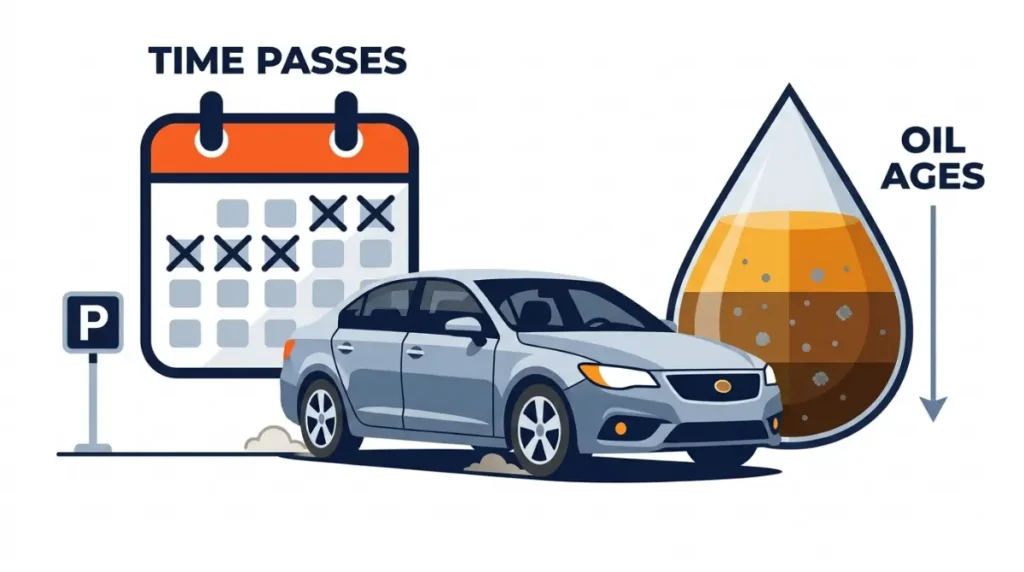
Subaru says yes: it states that oil chemically breaks down over time, even when the car is not driven often.
What one maker says about time
Subaru ties that breakdown to the oil’s lubricating and cleaning abilities and sets a 6-month limit for most of its vehicles. We retrieved no independent document showing that time alone, with no driving, harms oil.
What the retrieved study covers
A 1992 SAE study of short-trip oil tested one methanol-fueled and one gasoline vehicle. Cool sump temperatures let more fuel and water collect, both oils lost protective properties, and some recovered after a later long trip. That is a short-trip finding, not a sitting finding.
What each carmaker prints: months or miles, whichever first
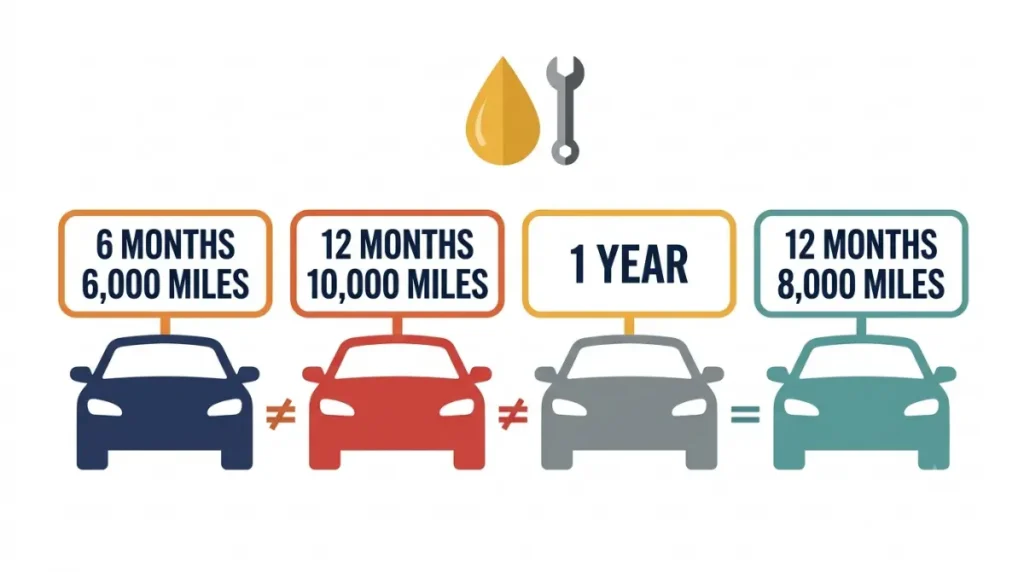
Each row below is the maker’s own wording, retrieved 10 October 2026, and scoped to the document we opened.
The table
| Maker | Printed time limit | Paired mileage | Applies to | Source (retrieved 10 Oct 2026) |
|---|---|---|---|---|
| Subaru | Every 6 months (“should”) | 6,000 miles, whichever comes first | “Most Subaru vehicles on the road today”; no model-year range stated; EV owners are told to check their booklet | Subaru, Service Intervals: Months or Miles? |
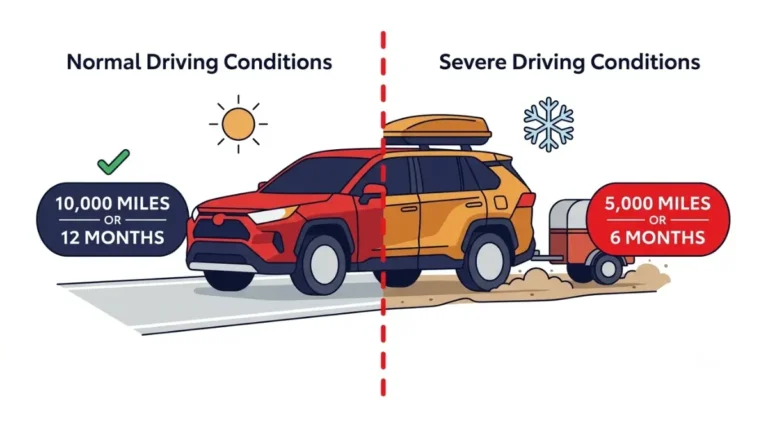
| Toyota | Replace after 12 months, even if no reminder appears | Over 10,000 miles since the last change | 2026 Tacoma only; the same guide lists 5,000 miles or 6 months for special operating conditions | Toyota 2026 Tacoma Warranty & Maintenance Guide, p. 39 |
| Chevrolet | “Must” be changed at least once a year | None fixed; Oil Life System message otherwise | Vehicles with the Oil Life System, which the page ties to 2004 and newer GM vehicles | Chevrolet, engine oil page |
| Hyundai | 12 months | 8,000 miles | One 2026 owner’s manual, platform code LX3 (model name not shown); the cycle assumes Hyundai’s recommended oil, and other oil falls under severe usage | Hyundai 2026 owner’s manual, maintenance schedule |
The verbs differ: Subaru says “should”, Chevrolet says “must”, and Toyota says to replace the oil after 12 months. Read yours as written.
Makes not listed
Honda’s owner’s manual says to change the oil yearly if the Maintenance Minder has not prompted a change within 12 months, but the page we opened shows no model year, so it is not tabulated. The Ford support page we opened gives no month figure; check your truck’s manual. We retrieved no document for other makes.
6 months, 12 months, or let the oil monitor decide?
Use the number your own manual prints; nothing we retrieved says a 6-month change is required where the maker prints 12.
If your maker prints 6 months
Subaru’s 6-month guidance applies even to a car that rarely moves, so change on the calendar.
If your maker prints 12 months or “yearly”
Toyota, Hyundai and Chevrolet printed yearly limits, so changing sooner is your choice, not a documented requirement. A shop’s 6-month sticker is that shop’s schedule; compare it with your manual.
If you have an oil life monitor
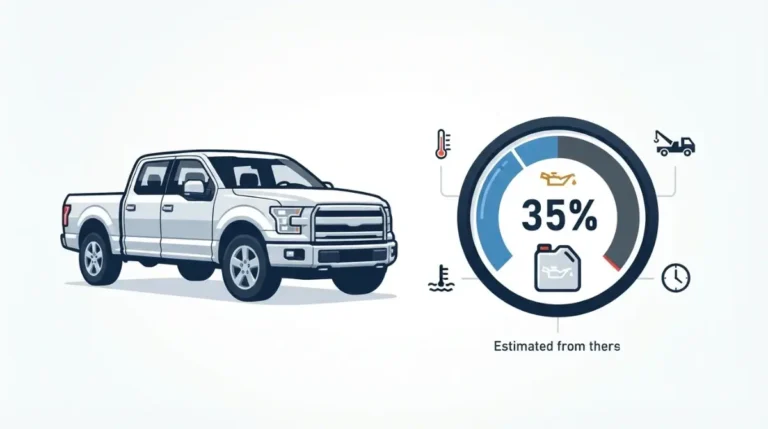
Chevrolet says the oil life monitor may not call for service for more than a year, yet the change is still due at least yearly. For reading the display, see what the percentage actually means.
Short trips: when a 6-month change is justified
Short trips are the situation where changing sooner has a documented rationale.
🔍 Why It Happens: On a short trip the oil sump stays cool, and the 1992 SAE study found that cool sump temperatures let more fuel and water collect in the oil.
Why short trips are different
Toyota’s 2026 Tacoma guide gives 5,000 miles or 6 months for trucks driven mainly on dirt or dusty roads. We retrieved no maker definition of short-trip severe service, so check your manual’s special-conditions list or our severe-service oil change guide.
What your monitor already accounts for
Chevrolet says its Oil Life System estimates how long the oil will last based on how you use the vehicle.
Going past the time limit while still under warranty
Makers’ booklets treat skipped maintenance as an exclusion, while federal rules protect routine service done outside the dealer.
What the pillar establishes
Per the warranty rule behind this, federal rules bar a carmaker from voiding your warranty only because you or an independent shop did routine service. The same pillar documents that Ford, Toyota and Chevrolet booklets exclude coverage for problems missed maintenance causes (pillar updated 8 October 2026).
What to do with your own booklet
✅ Do This: Read the maintenance section of your warranty booklet, keep dated receipts, and ask your dealer in writing how it treats a change that is late by time but low on miles. This article does not decide whether a late change affects a particular claim.
Overdue? What to do if it’s been more than a year
A late change is fixable: get it done, record it, and reset the reminder.
Find your number
Open your warranty and maintenance booklet or owner account; Subaru names its booklet and MySubaru for this, and other makers put it in the owner’s manual maintenance chapter. We retrieved no maker document giving a grace period past the limit.
After the change
- Have the oil and filter changed to the specification in your manual.
- Keep the dated receipt with your records.
- Reset the oil life monitor; Chevrolet says the system must be reset after the change.
- Set your own reminder for the next date.
Oil change every 6 months: quick answers
1. Is it OK to go a year between oil changes?
A year between oil changes is within the printed limit for Toyota, Chevrolet and Hyundai manuals checked; Subaru prints 6 months.
2. Do I need an oil change every 6 months if I don’t drive much?
An oil change every 6 months applies where the maker prints it, as Subaru does. Where it prints 12 months, earlier is your choice.
3. Does oil go bad if the car sits?
Subaru says oil chemically breaks down over time even when the car isn’t driven often; we retrieved no independent document on sitting alone.
4. Is an oil change 6 months or 5,000 miles, whichever comes first?
Subaru prints 6 months or 6,000 miles, whichever comes first; Hyundai prints 8,000 miles or 12 months. Check your own manual’s pairing.
5. What if the oil life monitor still shows a high percentage after a year?
Chevrolet says the oil change is still due at least once a year, and the oil life system must be reset afterward.
6. Does missing the oil change time limit affect my warranty?
Ford, Toyota and Chevrolet booklets, per our warranty pillar, exclude coverage for failures caused by missed maintenance. Read yours and ask your dealer in writing.
7. Do short trips need a more frequent oil change?
Short trips: a 1992 SAE study found the oil lost protective properties, so check your manual’s special-conditions oil change schedule.
8. Does the oil type change the oil change limit?
In Hyundai’s 2026 manual, the 12-month cycle assumes Hyundai’s recommended oil; other oil falls under the severe-usage condition.
9. Where do I find my maker’s oil change time limit?
Your oil change time limit is in your warranty and maintenance booklet or owner’s manual; Subaru also lists schedules in MySubaru.
10. Does the oil life monitor count time for an oil change?
Chevrolet’s oil life monitor estimates life from vehicle use, yet a change is still required at least yearly, whatever the percentage.
Find your printed limit, then set the reminder
Your manual’s number is the rule: Subaru prints 6 months, while Toyota, Chevrolet and Hyundai print yearly limits in the documents we retrieved. Find yours, note the verb and the mileage pairing, and compare it with any shop sticker. Then use the Maintenance Interval Planner linked above so the date never depends on a sticker.