What Is Documented Behind High Mileage Oil’s 75,000-Mile Label
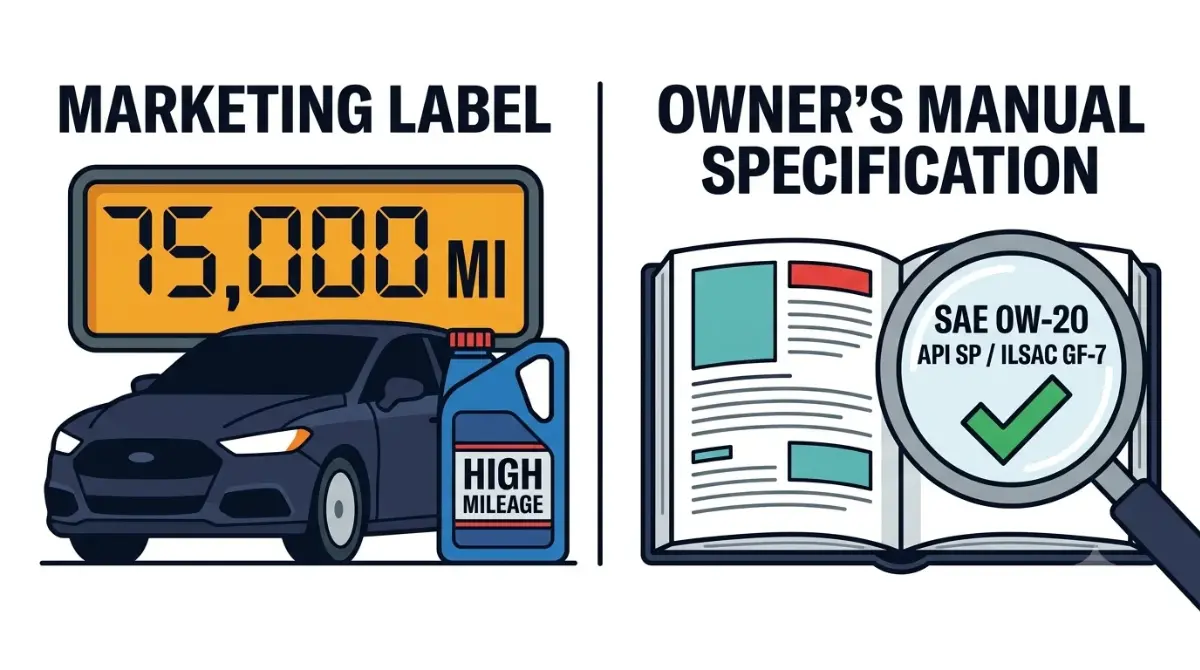
Table of Contents
Is high mileage oil just a 75,000-mile label?
The short answer
The number is a label, not a standard. Mobil and Valvoline both aim their high mileage oil at engines past 75,000 miles, but the API pages we read list no high-mileage category. Whether it suits your engine depends on your manual’s oil specification, not the odometer.
Find your situation
- Weighing a bottle or a shop upsell: start with the label table.
- Still under warranty: read the warranty section.
- Unsure about the interval: read the interval section.
- Seeing drips or adding oil between changes: read the leaks section.
ℹ️ Safety Note: This guide is general information about oil labels and warranty documents, not legal advice or an inspection of your vehicle. Terms differ by automaker, model and model year. It gives no oil-change procedure; follow your owner’s manual or use a qualified shop.
Who decides what counts as high mileage oil?
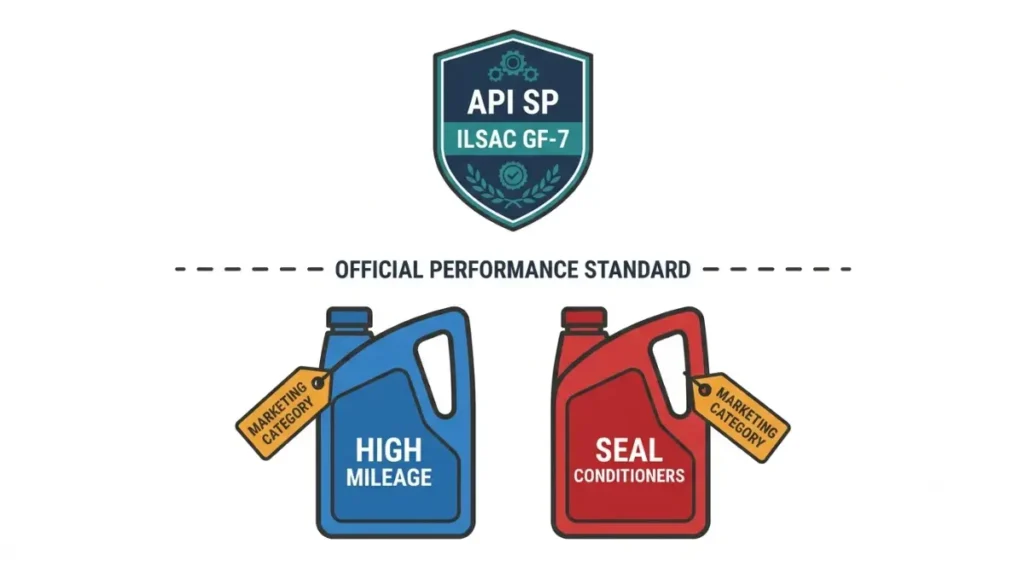
No standards body we found defines high mileage oil. API licenses oil by service category and certification mark, and neither its category pages nor its branding guide lists a high-mileage grade.
What API licenses (and what it doesn’t)
API’s category page, checked October 12, 2026, lists SP, SN, SM, SL and SJ as current gasoline categories, plus ILSAC GF-6A and GF-6B. Its branding guide calls the marks the marketer’s warranty that licensed oil meets API 1509. Neither mentions a mileage-based grade.
Newer labels, same point
MOTOR reported that API approved SQ and ILSAC GF-7 for licensing from March 31, 2025. Valvoline’s MaxLife listing cites GF-7A and SQ, so the mileage wording is the maker’s own addition.
What high mileage oil labels claim, and what is documented
Makers agree on the number and little else.
Label claims compared
| Source | Mileage wording | Interval or leak claim | Applies To |
|---|---|---|---|
| Mobil 1 High Mileage | Over 75,000 miles | Up to 10,000 miles or 1 year, whichever first | Full synthetic; sheet dated 10-2023 |
| Mobil Super High Mileage | Over 75,000 miles | Up to 5,000 miles or maker interval, whichever is longer | 5W-30 page |
| Valvoline MaxLife | 75,000 miles or more | Seal conditioners for leaks, oil use | Synthetic blend (NAPA listing) |
| Toyota Tacoma guide | No mention | Owner’s Manual sets viscosity | 2026 model year |
Sources: manufacturer pages and Toyota’s 2026 Tacoma guide (pp.36, 39, 46), checked October 12, 2026.
Can I use it before 75,000 miles?
Valvoline says MaxLife also benefits new and rebuilt engines, while Mobil designs its high mileage oil for engines past 75,000 miles. Neither replaces your manual’s viscosity grade and specification.
Synthetic, blend or full synthetic?
Mobil 1 High Mileage is full synthetic; the MaxLife listings we read are synthetic blends, so composition doesn’t define the category.
Does high mileage oil change your warranty?
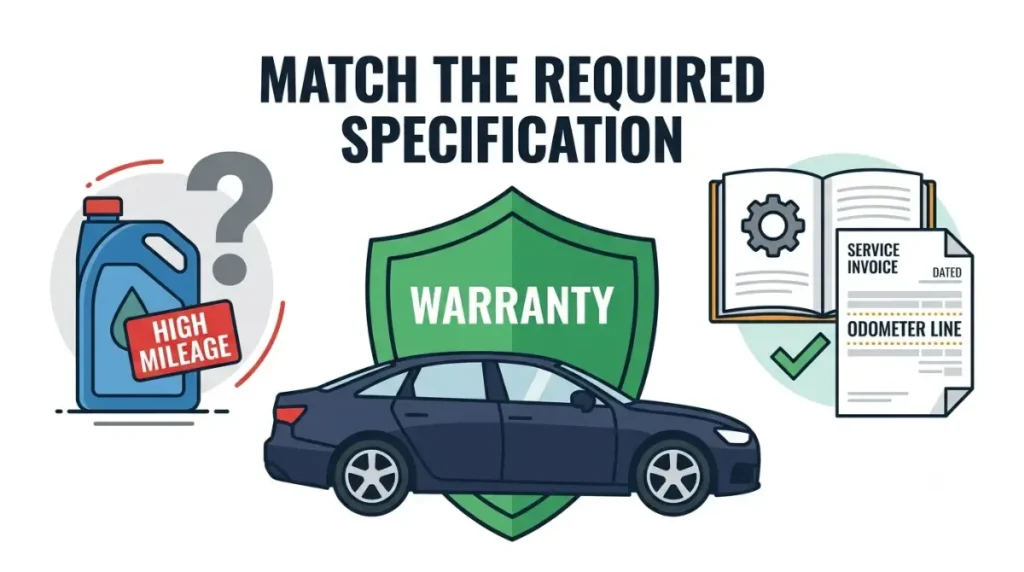
No document we read ties warranty coverage to a high-mileage label; your booklet’s oil specification and maintenance record count.
What the FTC says
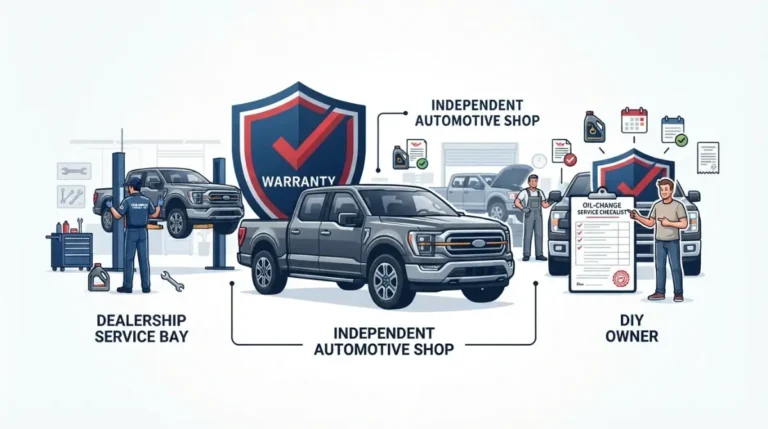
The FTC’s guide to auto warranties, dated April 2024 and checked October 12, 2026, says you don’t have to use the dealer for maintenance and that a maker must prove an aftermarket part caused damage. It advises keeping oil-change records, as the oil change warranty rule explains.
What Toyota’s guide excludes
📋 On the Record: Toyota’s 2026 Tacoma Warranty & Maintenance Guide (25-TCS-19156) excludes damage from improper maintenance, including fluids other than those the Owner’s Manual specifies (p.14). It points to the Owner’s Manual for viscosity (p.36) and never mentions high mileage oil. Applies to the 2026 Tacoma only; checked October 12, 2026.
Is my car still covered at 75,000 miles?
That Tacoma’s powertrain coverage is 60 months or 60,000 miles (p.13), ending before 75,000 miles. Our warranty-rule guide reports a 2019 Kia Optima engine failure at 80,000 miles inside 10-year/100,000-mile powertrain coverage. Check your own booklet.
✅ Do This: Ask any shop to print the viscosity grade, API specification, any maker specification your manual names, and the odometer reading on the invoice. Compare it with your manual’s oil line.
Do you change high mileage oil more often?
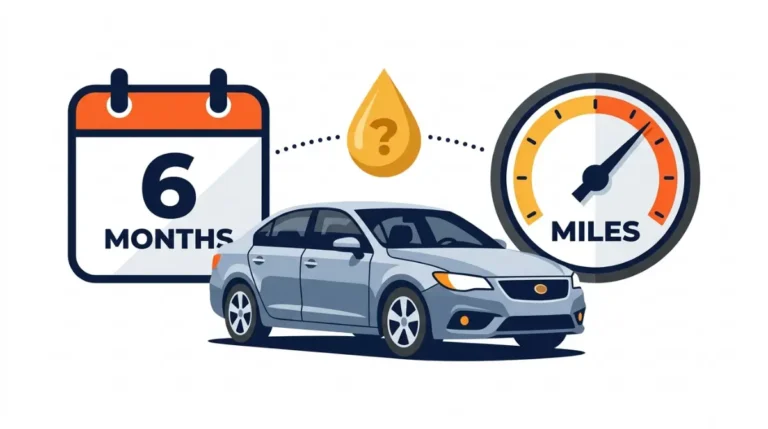
The change interval comes from your vehicle maker’s schedule, not from the bottle.
Label intervals versus the maker’s schedule
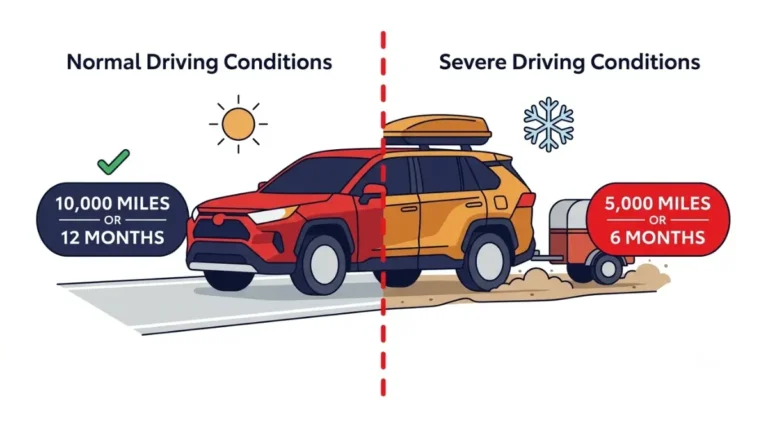
The table’s interval claims are the oil maker’s. Toyota’s 2026 Tacoma guide says to replace oil and filter after 12 months or 10,000 miles, whichever comes first (p.39, note 4), with no separate high-mileage step through 150,000 miles (pp.38-43).
See how often to change oil by your maker’s own limits for other makers.
Special operating conditions
Toyota says drivers mainly in its listed special operating conditions should change oil and filter at 5,000 miles or six months, regardless of the oil used (p.46). Our severe-service oil change triggers guide compares Ford, Toyota and Kia.
Leaks and burning oil: what the label cannot fix
A label can’t tell you why oil is leaking or disappearing.
Does high mileage oil stop leaks?
Valvoline says MaxLife’s seal conditioners help prevent and reduce oil leaks by restoring flexibility to hardened or shrunken seals. We found no independent test of that claim.
🔍 Why It Happens: Valvoline’s description assumes some aging seals have hardened or shrunk. It can’t show whether your drip comes from a seal, so a shop must find the source.
If your engine burns oil
Toyota’s 2026 Tacoma guide asks owners to check oil level monthly (p.34), which is how you spot burning oil early. For a 2018-2020 F-150 5.0L, see Ford’s answer on 2018-2020 F-150 5.0 Coyote oil burning.
✅ Do This: Ask the shop to identify where the oil is going and to record how much you add between changes.
What a delay costs, and what to ask the shop
The real risk isn’t the oil type; it’s trusting a bottle over the booklet and letting changes slip.
What skipped changes can cost
Toyota’s 2026 Tacoma guide warns that skipping regular oil and filter changes can cause oil starvation or gelling, with repairs not covered (p.34). So the maker’s schedule sets your date.
What to put on the invoice
Our proof-log standard, not a maker requirement, lists seven items: date, odometer, VIN, oil specification and viscosity, filter part number, who did the work, and receipts. Printed by the shop, they give you a record if a claim is questioned.
High mileage oil questions, answered
1. Is 75,000 miles really high mileage?
It’s the figure makers print on high mileage oil labels; the API pages we read list no high-mileage category.
2. Is there an official standard for high mileage oil?
Not in the API pages we read; they list service categories and marks, none for high mileage oil.
3. Does high mileage oil stop leaks?
Valvoline says its high mileage oil’s seal conditioners help reduce leaks; we found no independent test. Have a shop diagnose any leak.
4. Can I use high mileage oil before 75,000 miles?
Valvoline says its MaxLife high mileage oil also suits new engines; Mobil targets over 75,000 miles. Match your manual’s specification.
5. Does high mileage oil void my warranty?
No document we read says a high mileage oil label decides it; your manual’s specification does. Ask the shop to print it.
6. Does high mileage oil last longer between changes?
Mobil claims up to 10,000 miles or one year for its high mileage oil; Toyota’s 2026 Tacoma guide sets its own schedule.
7. Is high mileage oil synthetic?
It varies: Mobil 1 High Mileage is full synthetic, while the Valvoline MaxLife high mileage listings we read are synthetic blends.
8. Does Toyota recommend high mileage oil?
Toyota’s 2026 Tacoma guide never mentions high mileage oil and points owners to the Owner’s Manual for viscosity.
9. How do I know a high mileage oil matches my manual?
Compare a high mileage oil bottle’s viscosity grade and specifications with your manual’s oil line, and have the shop print them.
10. Should I switch to high mileage oil if my engine burns oil?
Switching to high mileage oil won’t diagnose burning oil. Have a shop find where it goes and record how much you add.
Your next step with high mileage oil
Read the oil line in your owner’s manual and match its viscosity grade and specification, whether the bottle says high mileage or not. Write the date, odometer reading and oil on your record, and keep the receipt. If oil is leaking or disappearing, ask a shop where it goes.