3.5 EcoBoost problems Ford confirmed on 2011–2020 F-150s

Gen 1 and Gen 2 3.5 EcoBoost F-150s each have their own Ford bulletins. The cam phaser programs ended Jan 1, 2023, but open safety recalls are still free.
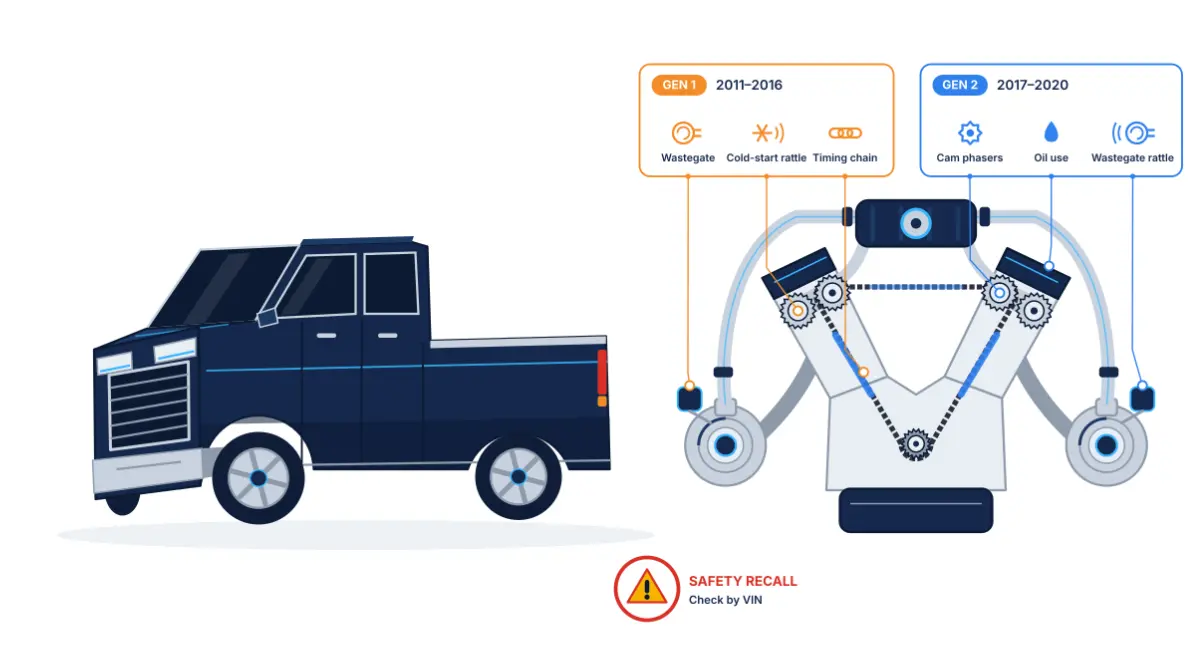
Table of Contents
Recall and bulletin status checked on November 12, 2026.
Ford documented 3.5 EcoBoost trouble on 2011–2020 F-150s in at least 11 service bulletins, three customer programs and four safety recalls, and nearly all of them stop at a build date rather than a model year. First-generation trucks (2011–2016) drew bulletins for timing chain wear, cold-start noise, turbo wastegates and a humid-weather stumble, while second-generation trucks (2017–2020) drew them for cam phasers, oil consumption and, on 2017 trucks only, a wastegate rattle.
Match your truck by build date before you match it to a symptom. A 2015 F-150 can land on either side of a cutoff.
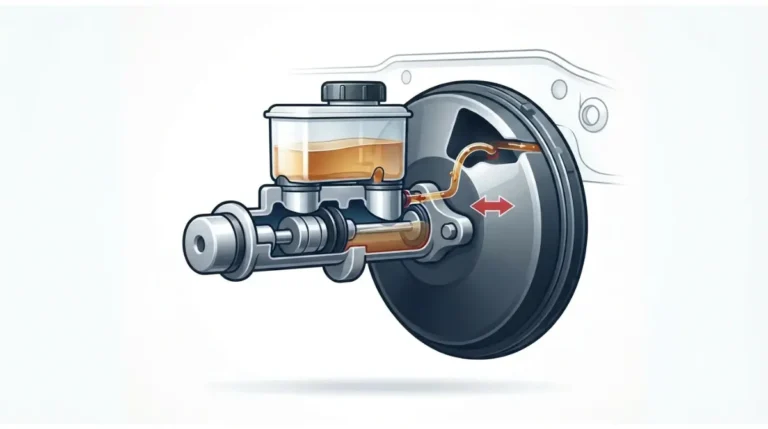
Safety note: Certain 2013–2018 F-150s with this engine are covered by recalls 16S24, 20S31 or 22S11, in which brake fluid can leak from the master cylinder into the brake booster; the brake master cylinder recall scope by build date shows which trucks. If your brake pedal travel or feel has changed, have a qualified technician inspect the brakes before you drive. On some 2015–2016 trucks with a block heater, recall 20S08 applies, and a damaged heater cable may increase the risk of fire when the truck is parked and plugged in, according to Ford’s owner letter. Leave that heater unplugged until a dealer has inspected it.
Which 3.5 EcoBoost is in your F-150?
Every 2011–2016 F-150 with this engine has the first generation, 2016 trucks included. Ford launched the second-generation 3.5 EcoBoost for 2017 with a port fuel injector beside each direct injector, and it came paired with the new 10-speed automatic.
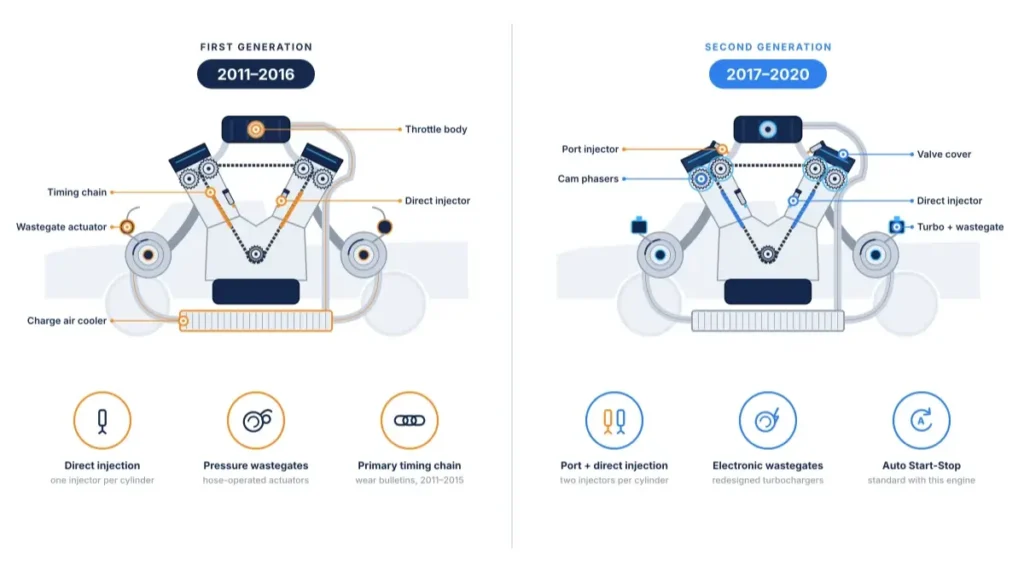
Raptor trucks and the 2019–2020 Limited use a high-output version that some Gen 2 bulletins treat separately. Trucks from 2021 on sit outside this page; the F-150 problems by year and what Ford still pays for covers them, along with the V8 and 2.7-liter engines.
2011–2016 Gen 1 trucks and the bulletins that cover them
TSB 13-8-1, published in August 2013, was Ford’s fix for 2011–2012 trucks that stumbled on hard acceleration after a long highway run in damp weather. The dealer checked the charge air cooler (the intercooler in front of the radiator) and fitted a lower air deflector to it, with an engine computer update booked into the same 0.5 hours.
| Problem | Ford document | Trucks | Build-date limit | What the dealer does |
|---|---|---|---|---|
| Stumble or misfire on hard acceleration in humid weather | TSB 13-8-1 | 2011–2012 | None stated | Checks the charge air cooler, adds a lower deflector, reprograms the PCM |
| Boost codes P0234 or P0299, surging, hiss or whistle | TSB 16-0013 | 2011–2015 | Engine built on or before Feb 28, 2015 | Pressure-tests each wastegate actuator, replaces any turbo that fails |
| Check engine light with P0016 | TSB 17-0026 | 2011–2014 | Oct 10, 2014 | Replaces the primary timing chain if VCT_INT_ACT1 reads +6 degrees or more |
| Rattle for 2–5 seconds after sitting 6+ hours | TSB 18-2305 | 2011–2015 | May 29, 2015 | Replaces all four cam phasers and the primary chain |
| Block heater cable damage | Recall 20S08 | 2015–2016 with a block heater | Dearborn Jul 31, 2014 – Sep 27, 2016; Kansas City Feb 10, 2015 – Oct 15, 2016 | Inspects and repairs the heater and cable at no charge |
| Brake fluid leaking into the booster | Recalls 16S24 and 20S31 | 2013–2017 | Aug 1, 2013 – Aug 1, 2016, split across both | Replaces the master cylinder, plus the booster if it’s leaking |
Source: Ford service bulletins and recall filings as published by NHTSA, including the TSB 16-0013 wastegate test.

The wastegate bulletin keys on the engine’s own build date, so the date that counts belongs to the engine itself. Ford books 2.7 to 5.1 hours for it, depending on the year and whether one turbo or both get replaced.
The humid-weather stumble never became a recall. NHTSA closed investigation PE13-018 on 2011–2013 trucks in April 2014 after logging 525 complaints to the agency and 3,731 to Ford, with no crashes or injuries, and its testing found the trucks would still hold speed and accelerate, only more slowly. If a 2011–2012 truck still stumbles, check whether the updated cooler and deflector are already on it.
P0016 gets 8.9 hours of book time under TSB 17-0026, and the chain comes out only when the scan tool reading crosses that +6 degree line. The rattle on trucks built through May 2015 is a bigger tear-down, laid out in what TSB 18-2305 tells dealers to replace on 2011–2015 trucks.
Cam phasers, oil use and a wastegate rattle on 2017–2020 trucks
Ford rewrote its Gen 2 cam phaser bulletin at least four times, and the cutoff moved more than 16 months along the way: from July 10, 2018 in TSB 20-2191, to October 31, 2019 in TSBs 21-2119 and 22-2200, to November 30, 2019 in TSB 23-2143.
| Problem | Ford document | Trucks | Build-date limit | What the dealer does |
|---|---|---|---|---|
| Rattle for 2–5 seconds after a cold start; Auto Start-Stop fails to restart, with or without P164C | TSB 23-2143 | 2017–2020 | Nov 30, 2019 | Replaces all four cam phasers; no other timing parts |
| More than 1 quart of oil used in 3,000 miles, no visible leak | TSB 20-2132 | 2017–2019, standard-output engine | Apr 1, 2019 | Runs an oil consumption test, then replaces both valve covers |
| Rattle from the engine bay under various conditions | TSB 20-2016 | 2017 only | None stated | Fits a spring washer kit to both wastegate actuators |
| Brake fluid leaking into the booster | Recall 22S11 | Certain 2016–2018 | Set by VIN | New master cylinder, plus a booster if it’s leaking |
Source: Ford’s TSB 23-2143 on its service site and Ford bulletins and recall filings published by NHTSA.
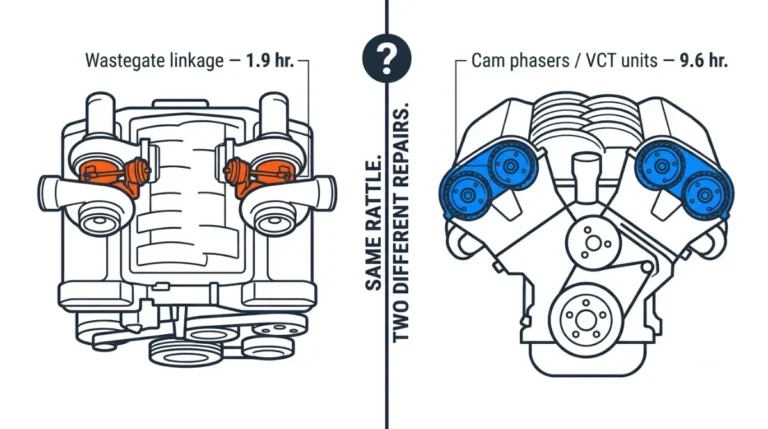
The phaser job books at 9.6 hours on a regular F-150 and 9.7 on a Raptor, and timing parts outside the bulletin’s parts list aren’t to be replaced. Ford’s service site now marks 23-2143 as superseded or deactivated, so ask the dealer which version its system shows for your VIN. The full symptom picture, including the knock some trucks make at a warm idle, is in the 2017–2020 cold-start rattle and the phaser bulletins.
Oil consumption takes longer to prove. After an oil change the dealer marks the dipstick, and you check the level every 200 miles until 1 quart is gone; covers are replaced only if that happens within 3,000 miles. Labor runs 0.8 hours for the test and 4.2 to replace the covers. Raptor and 2019–2020 Limited engines have their own high-output bulletin, TSB 20-2294, and the test is walked through in the valve-cover fix for 3.5 EcoBoost oil consumption.
Some 3.5 EcoBoost problems have no Ford bulletin
A startup rattle on a 2016 F-150 sounds exactly like one on a 2014, yet neither Gen 1 timing bulletin reaches a truck built after May 29, 2015. The same gap opens for 2020 trucks built after the November 2019 cutoff, and for 2018–2020 trucks with a wastegate rattle, since TSB 20-2016 names 2017 only. On those trucks the dealer works from Ford’s standard diagnostic manual, and the repair is decided by what the inspection finds.
Does Ford still pay for any of it?
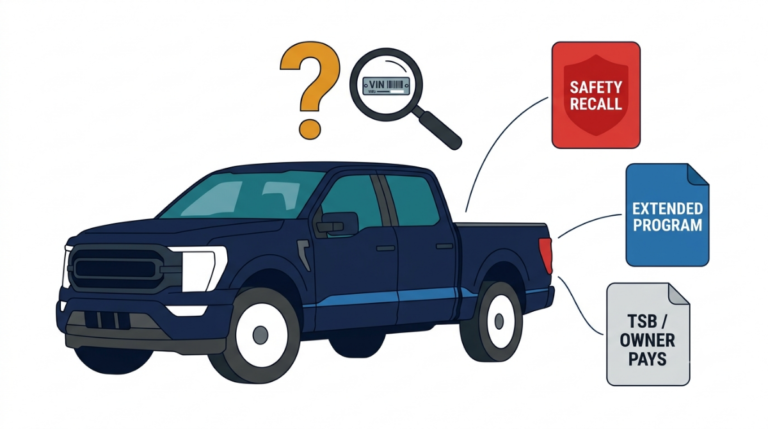
An open safety recall on your VIN is repaired at no charge, whoever owns the truck now. That applies to 16S24, 20S31, 22S11 and 20S08 if your truck is in their populations and the work hasn’t been done.
The cam phaser programs are finished. Program 21B10, a free engine computer update for certain 2017–2020 F-150s built through November 30, 2019, could be done until July 31, 2022. Program 21N08, a one-time reversal of that update for trucks that shuddered afterward, ran to January 1, 2023. Program 21N03 extended cam phaser coverage to the same date, but only if the 21B10 update was on a repair order dated on or before February 28, 2022, and Ford’s share fell with mileage:
| Mileage on the repair order | Ford’s share (F-150) |
|---|---|
| Up to 69,999 | 100% |
| 70,000 – 79,999 | 66% |
| 80,000 – 89,999 | 33% |
| 90,000 or more | 0% |
Source: Ford Customer Satisfaction Program 21N03, as filed with NHTSA. Lincoln vehicles used a different table.
There was never a safety recall for the phasers. A bulletin adds no coverage of its own either; Ford’s bulletin text says plainly that “Limits/policies/prior approvals are not altered by a TSB.” On a 2011–2020 truck today, a bulletin repair is yours to pay unless an extended service plan that covers the failed part is still in force.
How a dealer ties your VIN to a bulletin
The certification sticker on the driver’s door jamb gives a month and year of manufacture, with no day.
Coverage note: A sticker reading 05/15 can’t tell you whether your truck was built before or after the May 29, 2015 cutoff in TSB 18-2305, and TSB 16-0013 goes by the engine’s build date, which the sticker doesn’t show at all. Get both dates from the dealer’s system before anyone accepts or rules out a bulletin.
Bring the VIN and these questions to the service desk:
- What is the exact build date of my truck, and for a 2011–2015 truck, the build date of the engine?
- Which bulletins and open recalls show against my VIN, and which Ford programs were completed on it?
- Which bulletin and labor operation is this quote written to, and does the parts list match it?
- On a Gen 2 phaser job, is anything being replaced beyond TSB 23-2143’s parts list, and what did the inspection show to justify it?
- If you recorded P0016, what did VCT_INT_ACT1 read?
A public recall search by VIN shows unrepaired safety recalls only, so bulletins and the expired programs have to come from the dealer’s records.
Which repair to book first on a 2011–2020 3.5 EcoBoost
Open recalls go first, because they cost you nothing and two of them involve brakes or fire risk. Next comes any Gen 1 truck showing P0016 or boost codes along with poor running, since other codes and driveability concerns can come with the worn chain under TSB 17-0026.
A Gen 2 phaser rattle on its own can be scheduled rather than rushed. Ford’s program letters state that a noisy cam phaser “does not affect the vehicle safety, performance, or emissions,” though a new check engine light or a failed Auto Start-Stop restart moves it up the list. Ford’s book time sets the floor of any labor line: 9.6 hours for Gen 2 phasers, 8.9 for a Gen 1 primary chain, 5.0 for the oil test and valve covers, and 1.9 on the 2017 wastegate kit. Parts and the shop’s hourly rate come on top, and the cam phaser replacement cost at a dealer and an independent shop carries those numbers.
Call the dealer with your VIN and ask for the exact build date and every open campaign before you book anything else.
Found this helpful? See more of our guides on Google.
Want to see our guides first on Google?