Oil Level Rising Gas Smell? Find Your Exact Model Years

Oil level rising, gas smell on the dipstick? Mazda says a few millimeters above F did not affect reliability on its models. See what else is on record.

Table of Contents
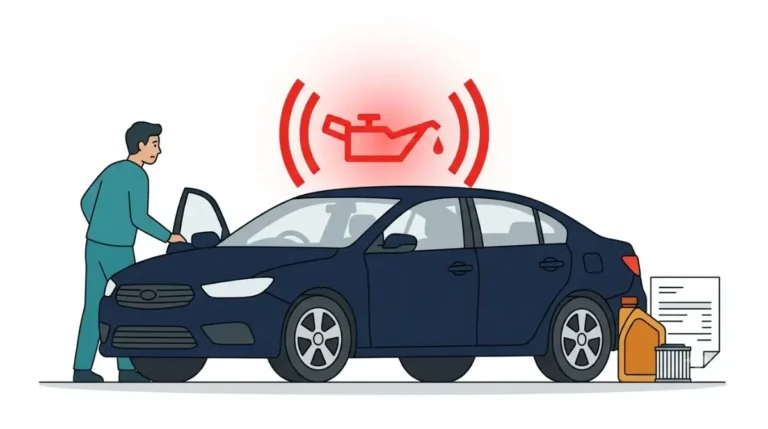
Oil level rising and the dipstick smells like gas?
A rising oil level with a gas smell is documented on direct-injection engines and ranges from harmless to damaging.
- Mostly short trips, no warning light: Sections 2 and 3.
- 2016–18 Honda Civic or 2017–18 CR-V, 1.5L turbo: Sections 4 and 5.
- 2020–22 Ford Escape or 2021–24 Bronco Sport, 1.5L: Sections 4 and 5.
- Holding a quote: Sections 5 and 6.
Independent oil changes and warranty claims: see the oil change warranty rule.
ℹ️ Safety Note: Raw fuel in engine oil and fuel leaks near a hot engine are fuel-system and fire-risk conditions. This article is general information, gives no repair procedure, and was not reviewed by a technician. Have a strong fuel odor, a rising oil level or any warning light inspected by a qualified technician before relying on the vehicle.
Gas smell on the dipstick: what a rising oil level means
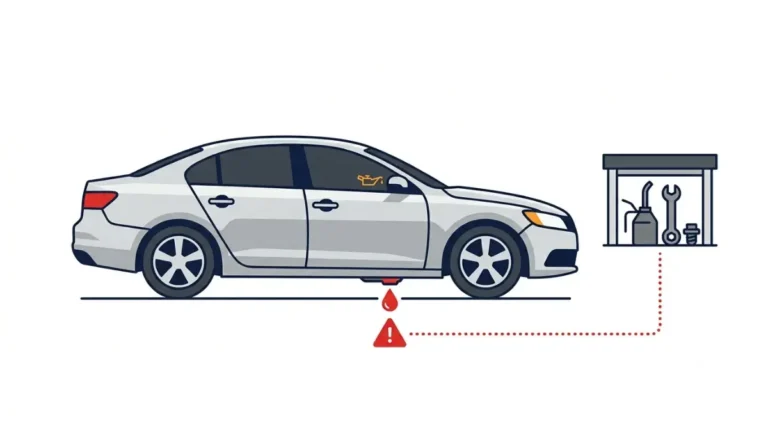
On a direct-injection engine, unburned fuel can pass the piston rings into the crankcase. A cool engine cannot evaporate it, so the level rises and smells of gas.
Fuel, overfill, or a false reading?
Fuel in the oil, an overfilled crankcase and a premature reading look alike; only an inspection confirms which.

How far above full is a concern?
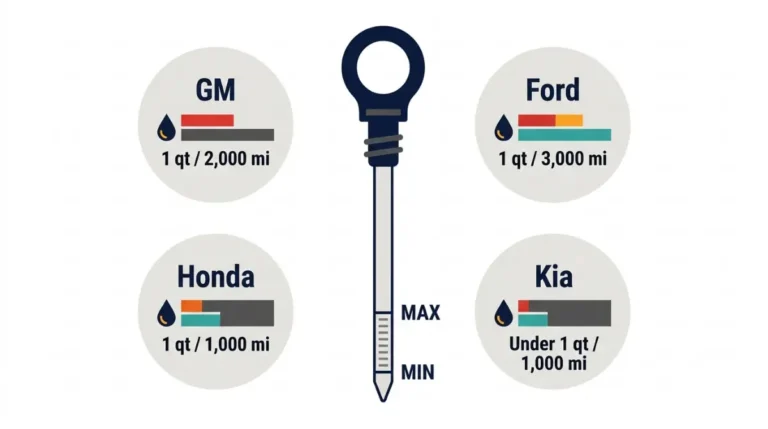
Mazda’s Service Alert SA-026/18 says a few millimeters above F did not affect reliability on its models; keep rechecking. It makes no claim for other makers.
A measurement error documented for one F-150 engine
Ford bulletin 20-2423 warns that skipping the 15-minute drain-back gives false readings. It covers 2018–20 F-150 and Navigator 3.5L EcoBoost High-Output oil consumption, not fuel dilution.
✅ Do This: If the smell is strong or the level keeps rising, have it inspected.
Why direct-injection engines put fuel in the oil
Mazda calls dilution normal when a direct-injection engine is driven mostly on extremely short trips.
Short trips and cold starts
🔍 Why It Happens: Direct injection sprays fuel into the cylinder, where some clings to the cylinder wall and is scraped by the piston ring into the oil. A warm engine burns it off through the PCV system; a cool one cannot. An SAE study found injection timing adds to dilution.
Mazda defines an extremely short trip as shutting off while the blue coolant light is on, or within five minutes after it goes out. Makers differ on whether short trips count as severe service; see our severe service oil change triggers guide.

Why a long drive can lower the level
Mazda says normal driving lets the fuel evaporate, so the level may fall back.
When it stops being normal
Honda’s 2019 memo links abnormal cases to control-unit software thresholds and possible camshaft and rocker arm failures.
What Honda, Mazda and Ford documented, by model year
| Maker, engine | Applies To | Document | What It Documents |
|---|---|---|---|
| Honda 1.5L turbo | Certain 2016–18 Civic, 2017–18 CR-V | Dealer memos, Oct 2018 and Apr 2019 | Dilution, misfire codes, software fix, warranty extension |
| Mazda | 2014–18 Mazda3/6; 2013–18 CX-5; 2016–19 CX-3; 2016–18 CX-9, MX-5 | Service Alert SA-026/18 | Dilution normal on extremely short trips |
| Ford 1.5L | 2020–22 Escape, 2021–24 Bronco Sport | NHTSA recall 25V467 | Injector fuel leak, fire risk; no oil dilution described |
Sources: the Honda, Mazda and NHTSA documents named in each row.
We found no maker document for 2019 or newer Honda 1.5L turbo models, or for F-150 fuel dilution.
Honda 1.5L turbo: 2016–18 Civic, 2017–18 CR-V
On October 22, 2018 Honda announced a product update for CR-Vs in five cold-weather states, citing codes P0300–P0304 and P0172. It reached 21 states December 5 and the Civic December 21. Honda’s April 5, 2019 memo added a warranty extension.
Mazda: the listed 2013–2019 models
Mazda’s alert says nothing on warranty; it says to diagnose P0172 to separate dilution from other causes.
Ford 1.5L: a fuel-leak recall, not an oil-dilution campaign
NHTSA’s record describes a cracked injector leaking fuel in the engine compartment. Neither it nor Ford’s 24V187 report says fuel enters the oil.
Is fuel in oil still covered? Honda’s window, Ford’s recall
Honda’s 6-year window from original sale date
📋 On the Record: Honda’s April 5, 2019 memo extended the powertrain warranty on camshafts and rocker arm assemblies to 6 years/unlimited miles from original sale (from 5 years/60,000 miles), for certain 2016–18 Civics and 2017–18 CR-Vs. Checked October 14, 2026; vehicle status not available.
By our arithmetic, not Honda’s, vehicles first sold before October 14, 2020 are past six years. NHTSA’s recall search does not show manufacturer campaigns like this; ask a Honda dealer to run your VIN.
Ford 25V467: what NHTSA’s record says as of October 14, 2026
📋 On the Record: NHTSA recall 25V467 (Ford 25S76) covers 2021–24 Bronco Sport and 2020–22 Escape with 1.5L engines; the repair is free. The record still says the final repair was “anticipated in July 2026”; current availability is not shown. Checked October 14, 2026.
See what “remedy not yet available” means for the interim letter.
If a claim is questioned
An independent oil change does not void a warranty by itself, but a maker can deny damage it shows maintenance caused. See who pays when a TSB, recall or program applies.
Fuel in oil: repair options and who pays for each
Option 1: oil change and software
Honda’s repair was a software update with an oil change, plus an A/C control unit on some CR-Vs. Mazda advises replacing the oil and filter once the level passes F.
Option 2: parts after diagnosis
Honda says most vehicles need only software; parts follow full diagnosis.
How to read a quote
💵 What It Costs: We found no sourced dollar figure, so none appears. Bill ≈ (labor hours × shop rate) + parts + diagnosis; ask for itemized lines and which a campaign or warranty covers. Rates vary by region and shop type.
When to stop waiting and get it inspected
Signs the maker documented
Honda lists lack of power, a check engine light with P0300–P0304 or P0172, and a whirling engine noise. Mazda says to replace the oil and filter promptly when P0172 turns the light on.
A strong raw-fuel odor or a rising level after an oil change
Ford’s 24V187 report lists fuel odor as a fire-risk warning. This article cannot say whether your vehicle is safe to drive.
✅ Do This: Ask a qualified technician to check the oil level and condition, stored codes, any odor’s source and open campaigns for your VIN.
Oil level rising and gas smell questions, answered
1. Why is my oil level rising and smells like gas?
Unburned fuel can pass a direct-injection engine’s piston rings into the oil, raising the level and adding a gas smell.
2. Is fuel in the oil normal?
Per Mazda, yes, when a direct-injection engine is driven mostly on extremely short trips; other causes need diagnosis.
3. How far above full is too far?
Mazda says a few millimeters above F did not affect reliability on its models; keep rechecking the level.
4. Can short trips put fuel in oil?
Yes. Mazda says repeated extremely short trips keep fuel from evaporating, and Honda ties dilution to very short cold-weather drive cycles.
5. Will a long drive burn off fuel in oil?
Mazda says normal driving lets the fuel evaporate, so the level may fall back; keep checking it.
6. Which Honda models have oil dilution coverage?
Certain 2016–18 Civics and 2017–18 CR-Vs with the 1.5L turbo; we found no Honda document for 2019 or newer.
7. Is the Honda oil dilution warranty extension still active?
It ran six years from original sale; by our arithmetic, vehicles first sold before October 14, 2020 are past it.
8. Does P0172 mean fuel in my oil?
Not always. Mazda says P0172 can come from dilution or other causes, which a technician must separate.
9. Can I keep driving with fuel in the oil?
This article cannot say whether a given vehicle is safe to drive; have it inspected by a qualified technician.
10. Does an independent oil change affect an oil dilution claim?
An independent oil change does not void a warranty by itself; a maker can deny damage it shows maintenance caused.
Your next step
Check your VIN for open campaigns first: ask a Honda dealer about a 2016–18 Civic or 2017–18 CR-V, or search recall 25V467 for a listed Ford. Then have the oil level, oil condition and stored codes inspected, and keep dated notes.