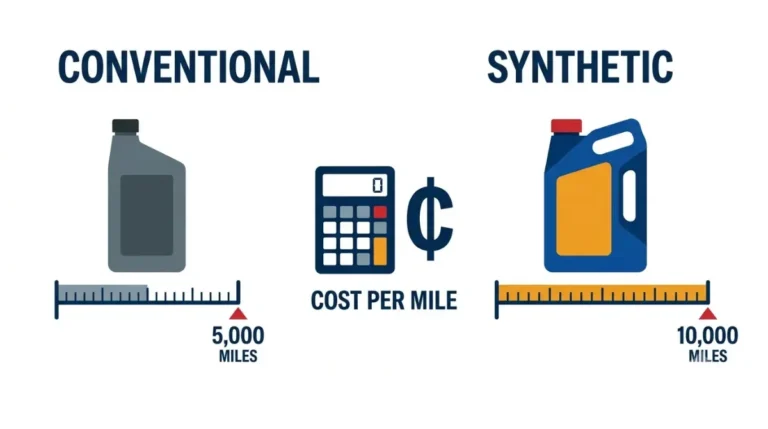
Your Dealer Says Oil Consumption Is Normal? Get the Exact Test

Oil consumption called normal? Toyota’s 2AZ test voids any result outside its 1,100–1,300-mile window. Know what to ask for before you agree.

Table of Contents
The dealer said your oil use is normal. Here’s what to ask
The short answer
When a dealer calls your oil consumption “normal,” it means the rate sits under that automaker’s limit for your engine, judged under the automaker’s conditions. That’s not proof nothing is wrong. You can ask for the measurement to be done formally, on paper.
Find your situation
- Under warranty: start with the six requests below.
- Near the warranty limit: the start date on your repair order matters most.
- Out of warranty: go to the escalation section; goodwill exists but isn’t guaranteed.
- 2018–2020 F-150 5.0L, or another engine with a bulletin: check the bulletin section first.
ℹ️ Safety Note: Engine oil protects the engine from internal damage, and running low can cause wear or, on some engines, a stall. This is general information, not legal or mechanical advice, and terms differ by automaker and model year. If the oil light comes on, add the oil your owner’s manual specifies and have a qualified technician inspect the engine before driving further.
What “normal” actually means when a dealer says it
Every automaker sets its own line for acceptable oil use, and attaches conditions to it.
GM’s number comes with conditions
GM’s guideline, published April 2026, accepts 1 quart per 2,000 miles for passenger cars and light-duty trucks. It applies only to personal-use vehicles under warranty, driven non-aggressively at legal speeds, maintained on schedule and, for trucks, unloaded. Gas trucks at or above 8,600 lb GVW are judged by fuel instead: 1 quart per 100 gallons (GM’s April 2026 oil consumption guidelines).
Honda’s middle band means “assess,” not “dismiss”
Honda’s 2019 dealer job aid sends 1 quart or more per 1,000 miles straight to troubleshooting. Between 1,000 and 3,000 miles per quart, the dealer calls Honda’s district service manager for an assessment.
Ford’s manual gives no number
In litigation over 2018–2020 F-150 5.0L trucks, Ford has said it does not quantify expected oil consumption in the Owner’s Manual, according to trade-press reports. So ask which document the dealer’s number came from. Engine-by-engine figures are in our guide to documented oil consumption limits by engine.
🔍 Why It Happens: A thin oil film coats the cylinder wall, and part of it burns with each power stroke. Stuck or missing piston rings, a clogged PCV system or an external leak all raise the loss.
Ask for these six things in writing
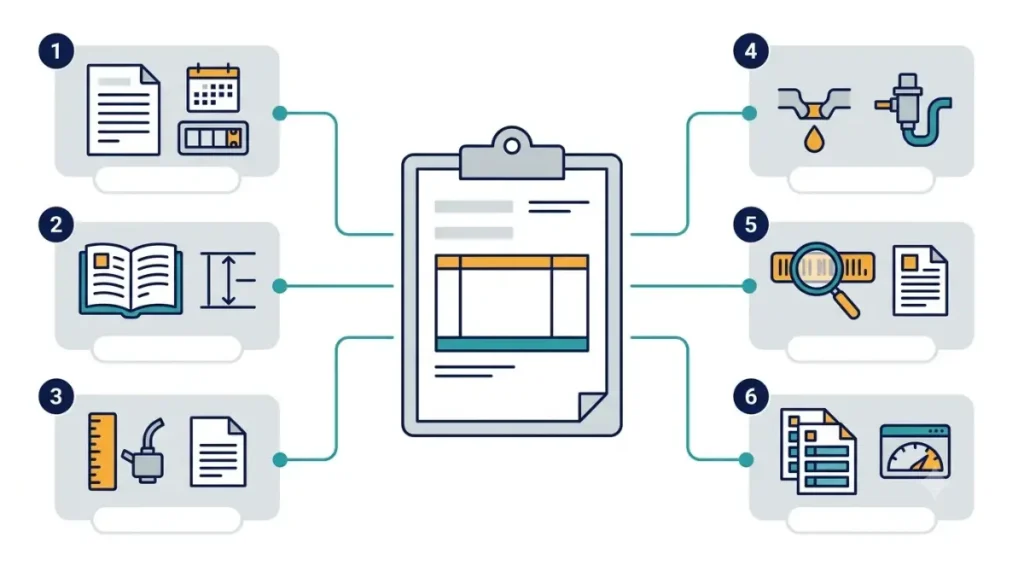
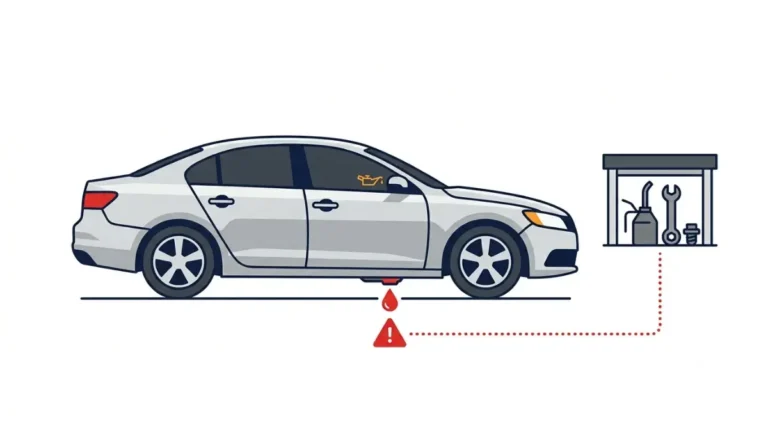
Ask for six things in writing. Each one comes from an automaker’s own dealer instructions.
The request list
| Ask for | Why it’s reasonable | Applies To (document) |
|---|---|---|
| 1. A repair order logging your complaint, date and mileage | GM requires the consumption rate documented on a repair order | GM PIP5025A, 2.4L (2012) |
| 2. The manufacturer’s formal test, by name | Toyota and Honda print step-by-step tests with forms | Toyota T-SB-0158-14; Honda JA 03381 |
| 3. The limit used, and its source | GM’s rate depends on how the vehicle is used | GM TechLink, April 2026 |
| 4. A written leak and PCV check | Leakage isn’t consumption | FCA CSN W80 (2021); Honda JA 03381 |
| 5. A bulletin and program check for your VIN | This is Honda’s first question to its district rep | Honda JA 03381 |
| 6. Your copy of the test form, and the return window | Honda gives the customer a copy; missing Toyota’s window voids the test | Honda JA 03381; Toyota T-SB-0158-14 |
The source documents are Honda’s dealer oil consumption test job aid and Toyota’s 2AZ oil consumption inspection bulletin.
📋 On the Record: Toyota T-SB-0158-14 Rev2 covers 2AZ engines in listed 2006–2013 Camry, Camry Hybrid, Corolla, Matrix, RAV4 and Solara models. The dealer seals the dipstick, drain plug, fill cap, oil cooler line and filter, then has you return in 1,100–1,300 miles; outside that range, the result is void. Checked October 21, 2026.
Why a leak check comes first
FCA’s W80 notice says oil leakage is not the same as consumption, and that all external leaks must be fixed before a test. A few drops per mile can account for a quart within a few hundred miles.
✅ Do This: At the counter, say: “Please open a repair order for oil consumption, run the manufacturer’s oil consumption test, and give me a copy of the test form.”
Check whether your engine already has a bulletin
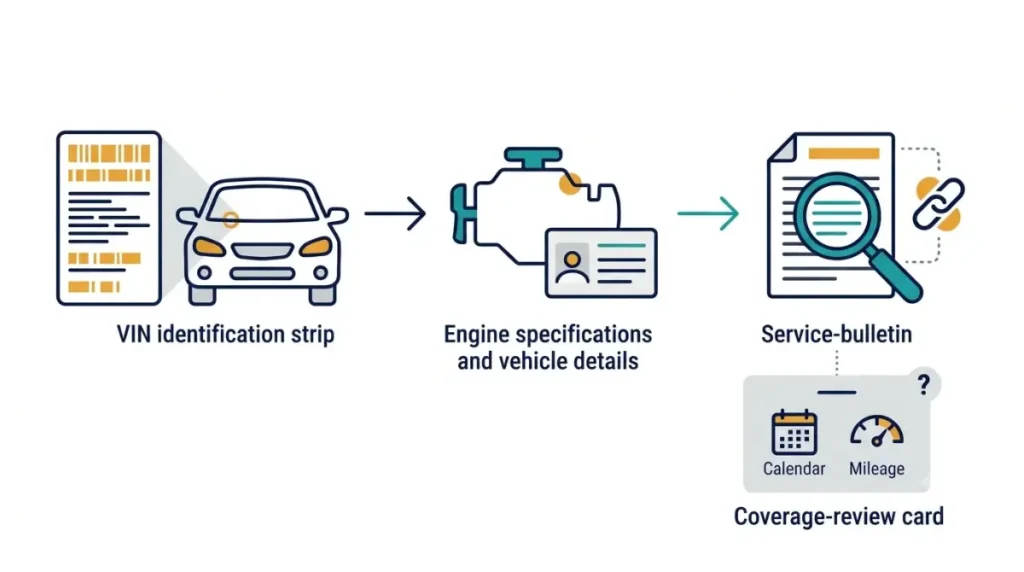
A bulletin or program changes what you ask for, so check it before the test starts.
Documented programs and their status
| Document | Applies To | Status (checked Oct 21, 2026) |
|---|---|---|
| Ford TSB 19-2365 | 2018–2020 F-150, 5.0L; more than 1 qt in 3,000 mi, no visible leaks | Active; doesn’t change warranty limits |
| Toyota ZE7 (POL14-12) | Listed 2006–2015 Toyota and Scion 2AZ models | Primary ended Oct 31, 2016; secondary runs 10 years from first use or 150,000 mi, so nearly all have aged out; confirm by VIN |
| FCA CSN W80 | 2015–2018 Renegade, 2016–2018 500X, 2015–2018 ProMaster City, 2.4L | Not confirmed; ask the dealer to check by VIN |
| Subaru settlement | Listed FB-engine models | 8-year/100,000-mile extension; should have ended; confirm by VIN |
A bulletin is not free repair
Ford’s bulletin states it doesn’t alter coverage limits. See Ford’s 5.0L Coyote oil consumption bulletin for that fix.
NHTSA’s recall lookup by VIN doesn’t show manufacturer customer-service campaigns. Ask the dealer to check the automaker’s own system too.
Start the test before your warranty runs out
The date on your repair order can matter as much as the test result.
Why the start date on the repair order matters
In Toyota’s ZE7 policy, a test started while the vehicle was eligible still supported the repair claim after coverage ended. The dealer attached the repair order showing the start date (Toyota’s ZE7 warranty policy). That rule belongs to one program, not to the law, but it shows why the date on the paperwork matters.
Who pays for the test
Inside warranty coverage or a program, dealers bill the test to the automaker as labor time. GM’s 2.4L bulletin allows 0.2 hour for test setup; FCA’s W80 allows 0.3 hour to start and 0.2 hour to finish, at no charge to the owner. Toyota’s 2AZ bulletin doesn’t cover an oil change needed to start a valid test.
💵 On these numbers: These are warranty labor allowances the automaker pays, not quotes. Outside warranty, labor rates vary sharply by region and between dealer and independent shops, so get the price in writing first. See who pays when a bulletin, recall or program applies.
Still told it’s normal? Escalate on paper
A passed test isn’t always the last word.
Ask for a second test
Toyota’s ZE7 policy allowed one more free test after 6 months or 5,000 miles, two at most. Ask whether your automaker allows a retest.
Open a manufacturer case and ask about goodwill
Honda’s job aid says not to disqualify an owner over oil change history unless there’s clear neglect. It also has dealers contact Tech Line on new, low-mileage vehicles. One hypothetical out-of-warranty case in the same document ends in goodwill repairs, which are discretionary.
Ask for a manufacturer case number. If coverage is denied, follow what to do if the dealer denies your warranty claim.
Don’t wait for the oil light to tell you
The oil light reacts to a low level, not to a consumption rate.
Why the light isn’t a measurement
On one GM 2.4L dipstick design, no oil shows once the engine is about 1.25 quarts low. FCA warns a low oil condition can eventually stall W80-listed vehicles.
What to tell the shop
✅ Do This: If the oil light comes on or the dipstick reads below the add mark, add the oil your manual specifies and have a qualified technician inspect the engine. Ask for the manufacturer’s oil consumption test, a leak inspection and a PCV check, each written on the repair order.
Dealer says oil consumption is normal: quick answers
1. Can a dealer refuse an oil consumption test?
The Honda and Toyota dealer documents we reviewed start a test on customer complaint. If refused, get that in writing and contact the automaker.
2. How long does an oil consumption test take?
Toyota’s 2AZ test runs 1,100–1,300 miles and FCA’s W80 test 1,500–1,700 miles; missing the window voids the result.
3. Who pays for an oil consumption test?
Inside warranty or a program, the automaker pays the dealer’s labor time. Outside warranty, get the oil consumption test price in writing first.
4. Is 1 quart per 2,000 miles normal?
For GM cars and light trucks, yes, under GM’s conditions: personal use, normal driving, on-schedule maintenance and no load.
5. What if the oil consumption test fails after my warranty ends?
In Toyota’s ZE7 program, a test started while eligible still counted. Get a repair order dated before coverage ends.
6. Can I ask for a second oil consumption test?
Toyota’s ZE7 program allowed one more free test after 6 months or 5,000 miles. Ask whether your automaker allows one.
7. Does an oil leak count as oil consumption?
No. FCA’s W80 notice says oil leakage isn’t consumption, and all external leaks must be fixed before testing.
8. Does Ford’s owner’s manual list normal oil consumption?
No. Ford has said in litigation it does not quantify expected oil consumption in the Owner’s Manual, trade press reports.
9. Can I get goodwill repairs for oil consumption out of warranty?
Possibly. Honda’s job aid shows a hypothetical out-of-warranty case ending in goodwill repairs, but goodwill is discretionary.
10. Does no oil light mean my oil consumption is normal?
No. The light reacts to level, and one GM 2.4L dipstick shows nothing at about 1.25 quarts low. If the light comes on, have a qualified technician inspect the engine.
Your next step at the service counter
“Normal” is a verdict, so ask for the measurement behind it. Take the six requests, get a repair order dated before your warranty ends, and keep your copy of the test form. If the answer stays “normal,” that paper trail is what a manufacturer case runs on.